

Project Details
Invasive species threaten ecosystems, agriculture, and global food security. Their spread is driven by complex interactions among climate, human mobility, trade networks, and ecological processes, making them difficult to predict and control using traditional approaches.
Researchers at the Biocomplexity Institute develop network-based models and simulation tools that help policymakers and agricultural stakeholders understand how invasive species move through interconnected systems. By combining ecological data, commodity flows, climate information, and high-resolution interaction networks, our team identifies vulnerabilities, evaluates intervention strategies, and supports evidence-based decision making.
What We Do
Our work integrates network science, simulation analytics, and food-system modeling to:
- Model the spread of invasive pests and weeds across landscapes and trade networks.
- Quantify vulnerabilities in regional and global food systems.
- Predict current and future species distributions under changing climate conditions.
- Evaluate intervention strategies and containment policies.
- Analyze multi-pathway transmission through transportation and commodity flows.
- Support agricultural resilience and biosecurity planning.
Key Capabilities

Network-Based Spread Modeling
We represent biological invasions as dynamic processes occurring across interconnected ecological and commodity networks, enabling realistic assessments of risk and spread.
Food System and Trade Network Analysis
By modeling commodity flows and international trade, we identify pathways that facilitate the movement of pests and assess vulnerabilities within food supply chains.
Scenario Analysis and Decision Support
Our simulation frameworks allow decision makers to compare intervention strategies and evaluate their effectiveness under uncertainty.
Climate and Habitat Modeling
We combine environmental and ecological data to project suitable habitats and estimate how future climate scenarios may influence invasive species distributions.
Applications
Our methods have been applied to: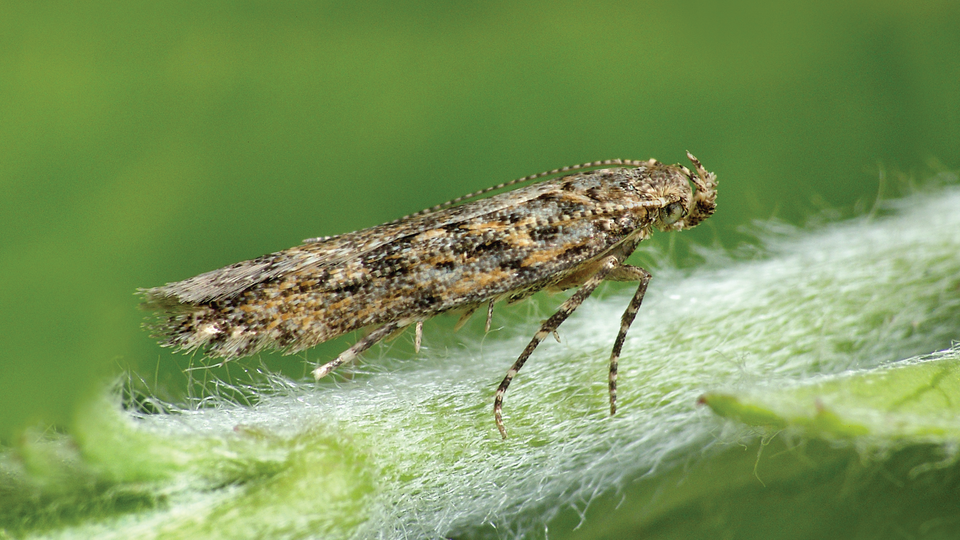
- Tomato leafminer (Tuta absoluta) invasions in Asia and Nepal.
- Fall Armyworm risk assessment in Egypt.
- Invasive weeds in Nepal's Chitwan-Annapurna Landscape.
- Agricultural commodity networks and food-system resilience.
- Multi-pathway biological invasion processes and intervention planning.
Representative Projects
A High-resolution Interaction Based Approach to Modeling the Spread of Agricultural Invasive Species
Supported by USAID's Integrated Pest Management Innovation Lab, this project developed interaction-based models to understand and predict the spread of agricultural invasive species across regions and trade networks.
Network Models of Food Systems and their Application to Invasive Species Spread
Funded by USDA NIFA, this effort examined how food-system networks influence biological invasions and how network analysis can improve resilience and control strategies.
Assessment of Invasive Alien Species Distribution in the Chitwan-Annapurna-Landscape (CHAL) Region, Nepal
Working with USAID IPM Innovation Labs, researchers evaluated the distribution and future risk of invasive species across Nepal's Chitwan-Annapurna Landscape.
USAID Egypt Mission: Pest Risk Assessment of the Fall Armyworm, Spodoptera frugiperda in Egypt
Researchers conducted pest risk assessments to help identify vulnerabilities and inform agricultural management strategies.
Research Highlights
Our work has appeared in leading journals including:
- PNAS Nexus
- Frontiers in Big Data
- Proceedings of the Royal Society B
- Crop Protection
- Journal of Pest Science
- Mountain Research and Development
From agricultural pests and invasive plants to future biological threats, the projects highlighted here represent only a glimpse of how BI's expertise in network science, simulation, and decision support helps organizations understand complex systems, evaluate interventions, and build more resilient food systems.
Sambaturu P, Sudhir M, Chen H, Vullikanti A, Muniappan R, Adiga A. Scenario-aware control of multipathway spread processes: Application to biological invasions. PNAS Nexus. 2026 Mar;5(3):pgag036. Link
Adiga A, Palmer N, Baek YY, Mortveit H, Ravi SS. Network models and simulation analytics for multi-scale dynamics of biological invasions. Frontiers in Big Data. 2022 Feb 7;5:796897. Link
de Campos MR, Béarez P, Amiens-Desneux E, Ponti L, Gutierrez AP, Biondi A, Adiga A, Desneux N. Thermal biology of Tuta absoluta: demographic parameters and facultative diapause. Journal of Pest Science. 2021 Jun;94(3):829-42. Link
Venkatramanan S, Wu S, Shi B, Marathe A, Marathe M, Eubank S, Sah LP, Giri AP, Colavito LA, Nitin KS, Sridhar V. Modeling commodity flow in the context of invasive species spread: Study of Tuta absoluta in Nepal. Crop Protection. 2020 Sep 1;135:104736. Link
Poudel AS, Shrestha BB, Joshi MD, Muniappan R, Adiga A, Venkatramanan S, Jha PK. Predicting the current and future distribution of the invasive weed Ageratina adenophora in the Chitwan–Annapurna Landscape, Nepal. Mountain Research and Development. 2020 Nov;40(2):R61. Link
McNitt J, Chungbaek YY, Mortveit H, Marathe M, Campos MR, Desneux N, Brévault T, Muniappan R, Adiga A. Assessing the multi-pathway threat from an invasive agricultural pest: Tuta absoluta in Asia. Proceedings of the Royal Society B: Biological Sciences. 2019 Oct 1;286(1913). Link
Maharjan S, Shrestha BB, Joshi MD, Devkota A, Muniappan R, Adiga A, Jha PK. Predicting suitable habitat of an invasive weed Parthenium hysterophorus under future climate scenarios in Chitwan Annapurna Landscape, Nepal. Journal of Mountain Science. 2019 Oct;16(10):2243-56. Link
Adiga A, Palmer N, Sinha S, Waghalter P, Dave A, Lazarte DP, Brévault T, Apolloni A, Mortveit H, Baek YY, Marathe M. Realistic commodity flow networks to assess vulnerability of food systems. Proceedings of the International Conference on Complex Networks and Their Applications. 2021 Nov 30:168-179. Cham: Springer International Publishing. Link
Mishra R, Eubank S, Nath M, Amundsen M, Adiga A. Community detection using Moore-Shannon network reliability: application to food networks. Proceedings of the International Conference on Complex Networks and Their Applications. 2022 Nov 8:271-282. Cham: Springer International Publishing. Link
Nath M, Venkatramanan S, Kaperick B, Eubank S, Marathe MV, Marathe A, Adiga A. Using network reliability to understand international food trade dynamics. Proceedings of the International Conference on Complex Networks and their Applications. 2018 Dec 2:524-535. Cham: Springer International Publishing. Link
Venkatramanan S, Wu S, Shi B, Marathe A, Marathe M, Eubank S, Sah LP, Giri AP, Colavito LA, Nitin KS, Sridhar V. Towards robust models of food flows and their role in invasive species spread. Proceedings of the 2017 IEEE International Conference on Big Data. 2017 Dec 11:435-444. Link